What remains in the memory
The riverbank still carries traces of elephants hauling timber, Chinese silk arriving by trade, coffee refineries, granaries, and grand teak houses that once overlooked the water.
Down by the river
Wat Ket is one of Chiang Mai's ancient river neighborhoods, a place that has resisted losing its identity to modern development. The community grew around Wat Ket temple and the Ping River, holding onto the dignity of its older houses, riverside lanes, and long memory.
That setting is why the restaurant's history cannot be separated from the riverbank itself. To understand Riverside, you first must understand the people, trade, and timber-era architecture that made this side of Chiang Mai distinctive.
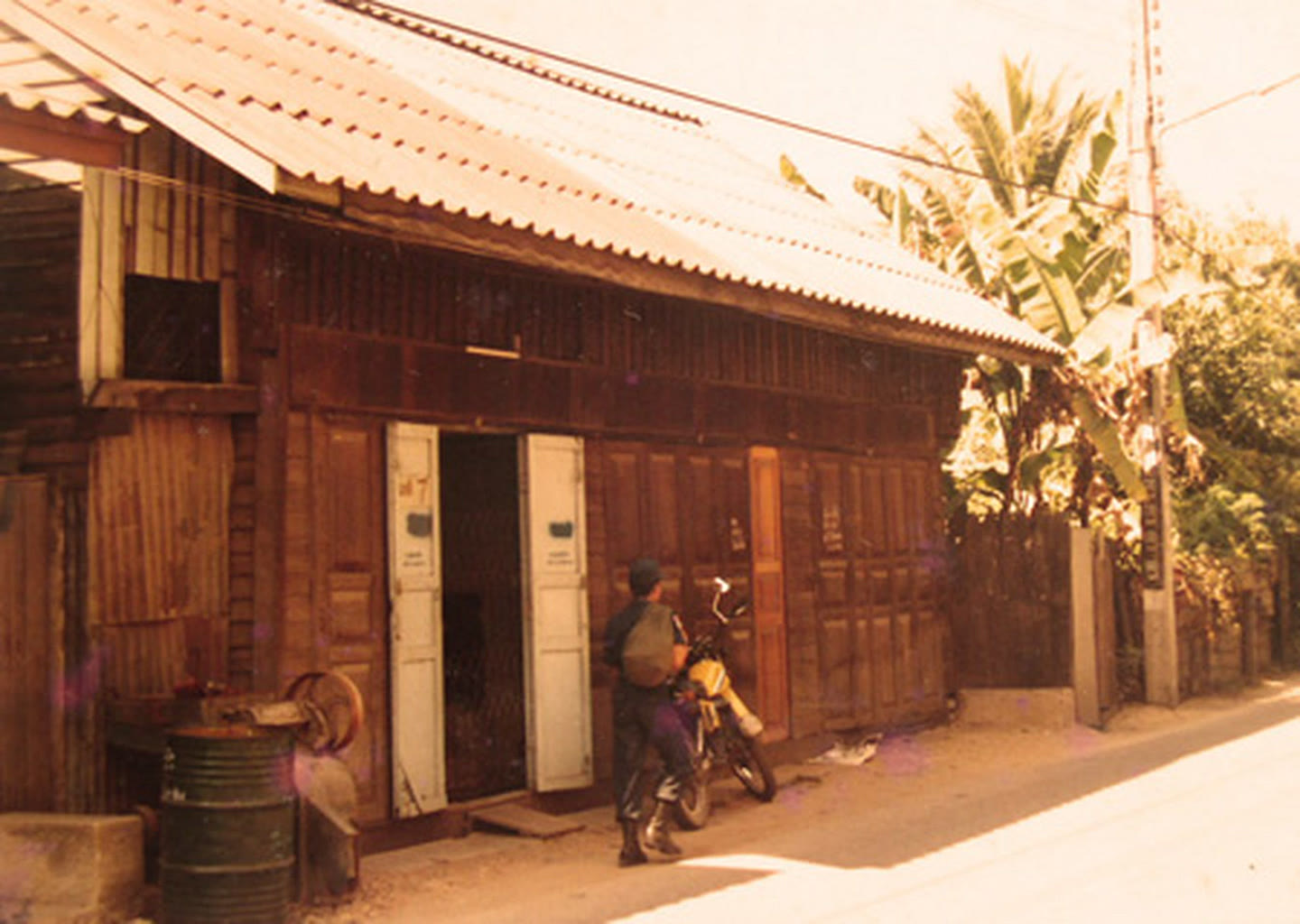
Charoenrat Road
In the 19th century, the east bank of the Ping River was known as a waterfront settlement. It was a practical, prosperous place to live because goods and people moved by water before road travel connected Chiang Mai more easily with Bangkok.
Chinese merchants, families from Sibsongpanna, Yunnanese traders, Burmese residents, Sikh families, missionaries, and hilltribe carpenters all appeared along what is now Charoenrat Road. Their lives gave Wat Ket a mixed, outward-looking character that still marks the area today.
These moments trace the river trade, daily markets, timber-era houses, and the opening of The Riverside on the east bank.
The east bank became known for river commerce, with goods moving by raft and boat through a city still closely tied to the Ping.
Dozens of teak houseboats lined the river, selling fruit, silk, opium, and other goods to merchants and residents from their riverside fronts.
Goods crossed to the west bank while vendors sold rice, vegetables, and food beneath longan trees at the market still remembered as Kad Ton Lamyai.
The Riverside Bar & Restaurant opened on this side of the river, helping bring new life to Wat Ket's old houses and riverfront setting.
Since 1984
When restaurants began opening in restored riverside buildings, Wat Ket became visible to a new generation of Chiang Mai residents and visitors. The Riverside was the first restaurant to settle on the east bank in 1984, followed by other cultural, dining, and nightlife spaces.
Today the address still carries that riverbank spirit: teak archicture, conversation, dinner, cruises, live music, and a neighborhood whose history reaches well beyond one evening out.
The riverbank still carries traces of elephants hauling timber, Chinese silk arriving by trade, coffee refineries, granaries, and grand teak houses that once overlooked the water.
Wat Ket temple and the surrounding community have been protected and renewed by residents, cultural groups, and heritage-minded organizations that encourage careful development.
Find directions, current hours, phone numbers, email, parking information, on the live Google Maps listing.